Role: Workshop Presenter and Facilitator
Partner/Client: Cofink & Systems Innovation Network
Industry: Healthcare
Project: Patient Ecosystem Mapping
Year: 2024
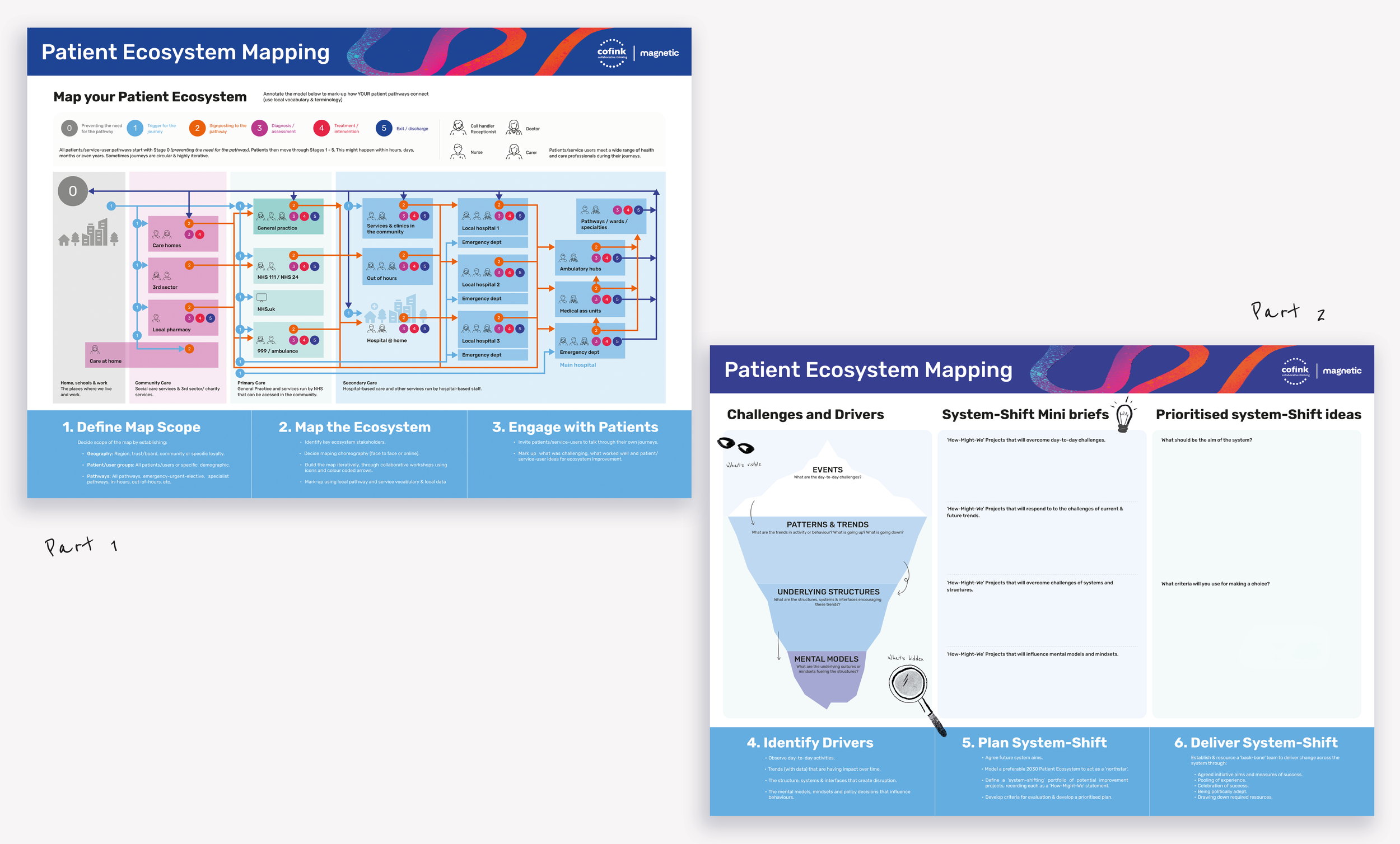
All healthcare systems share a common underlying structure. To make this visible, we used Tom Inns’ analogy of the London Tube Map, redesigning it to show the different ‘zones’ of care and the routes patients take through them. This perspective invites new questions: What’s in Zone 5? Where do the lines intersect? Which pathways loop around like the Circle Line? The result is a generic healthcare ‘tube map’ that visualises how patients navigate these complex ecosystems of care.
While many innovations in health and care draw on quality improvement methods from sectors like manufacturing, these approaches often drill down into single pathways or optimise specific services. Today’s challenges, however, demand that we zoom out - shifting emphasis toward prevention, improving interfaces between patients, service-users, and professionals, and responding to rapidly changing population needs.
Patient Ecosystem Mapping provides a way to step back and see the system as a whole, from the perspective of the patient. The process helps identify challenges across the ecosystem, reveal leverage points for system-shifting change, and create a shared language for collaboration. In practice, this involves co-creating maps with participants, marking out pathways, overlaps, and gaps, and then using the outputs to spark new ideas for innovation.
As part of the conference, I designed a series of workshop posters, booklets, and resources to make these complex ideas clear and accessible for participants. These tools supported the facilitation process and gave attendees practical takeaways they could apply in their own contexts.
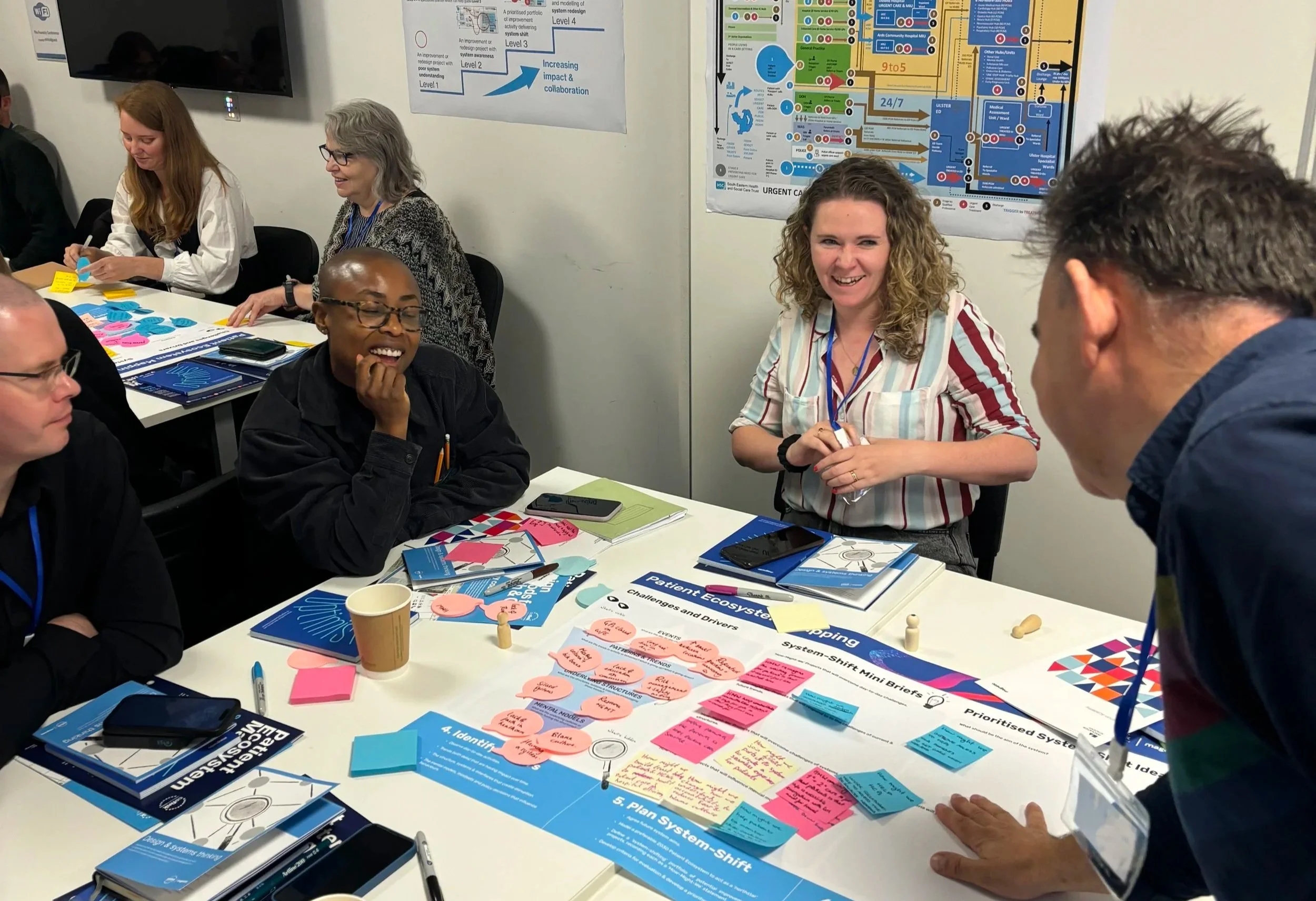
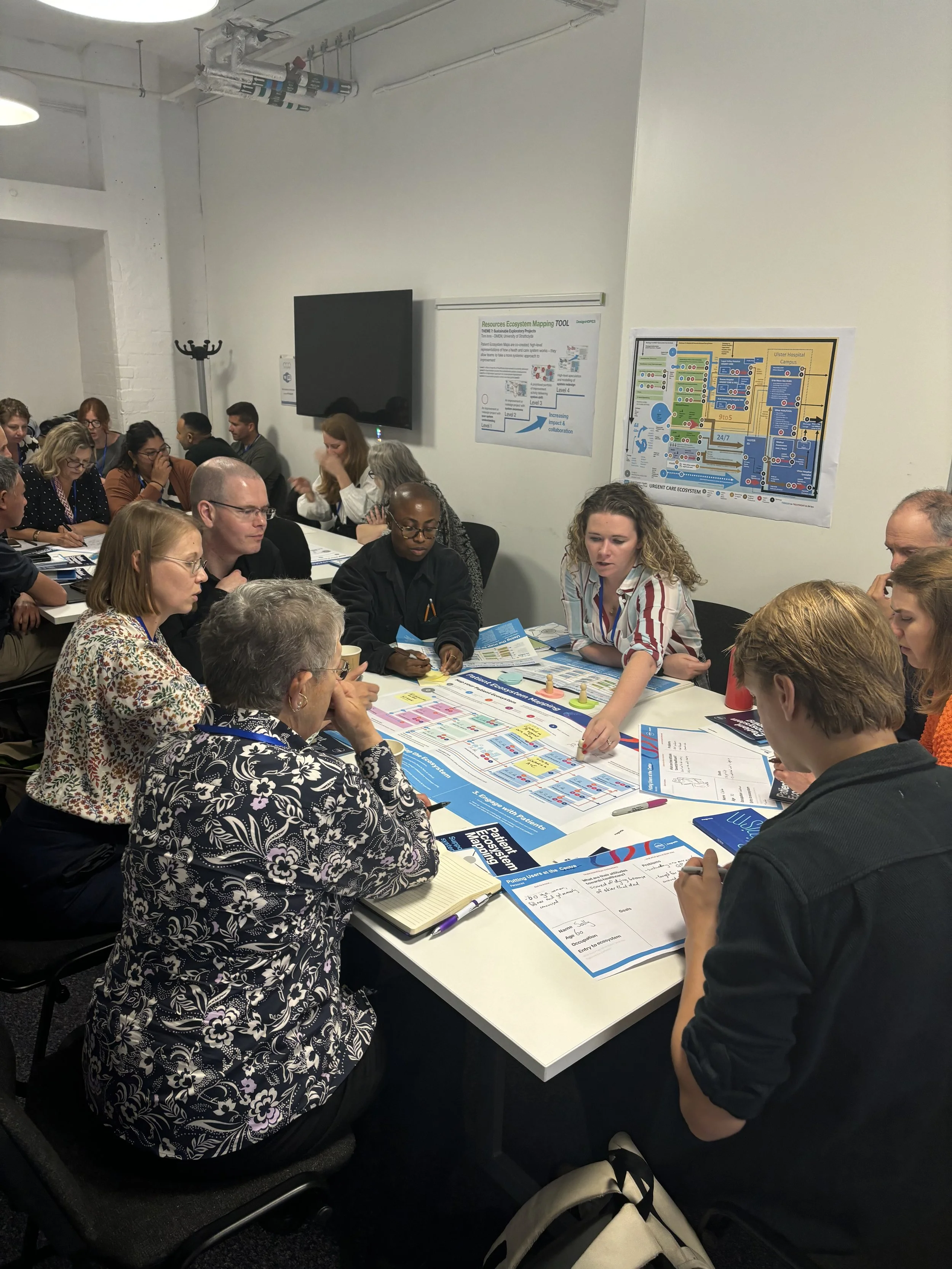
A 2-hour workshop at the Systems Innovation Conference, exploring the role of design and systems thinking in healthcare innovation.
As part of the Systems Innovation Conference, I co-facilitated a Patient Ecosystem Mapping workshop with Jen Jeng (Magnetic) and Tom Inns (Cofink). The session explored how different approaches can be used to identify system-shifting innovations in healthcare.
Many of today’s healthcare challenges require us to see the bigger picture - shifting focus toward prevention and improving the interfaces between patients, service-users, and professionals. Patient ecosystem mapping helps surface these challenges and translate them into opportunities for meaningful, system-wide change.
We collaborated with Tom Inns, who brings 25 years of facilitation experience helping individuals and organisations understand complex challenges and co-develop innovative solutions. Drawing on his expertise in systems thinking, and our design thinking practice, the workshop showed how combining these perspectives allows problems to be explored through multiple lenses - ultimately making problem-solving and solution development more impactful for patients and service-users.
My role focused on designing the workshop experience. In collaboration with Tom, I created all supporting content - from takeaway booklets and slides to workshop posters and a downloadable resource for participants - ensuring the materials were clear, engaging, and accessible during and beyond the session.
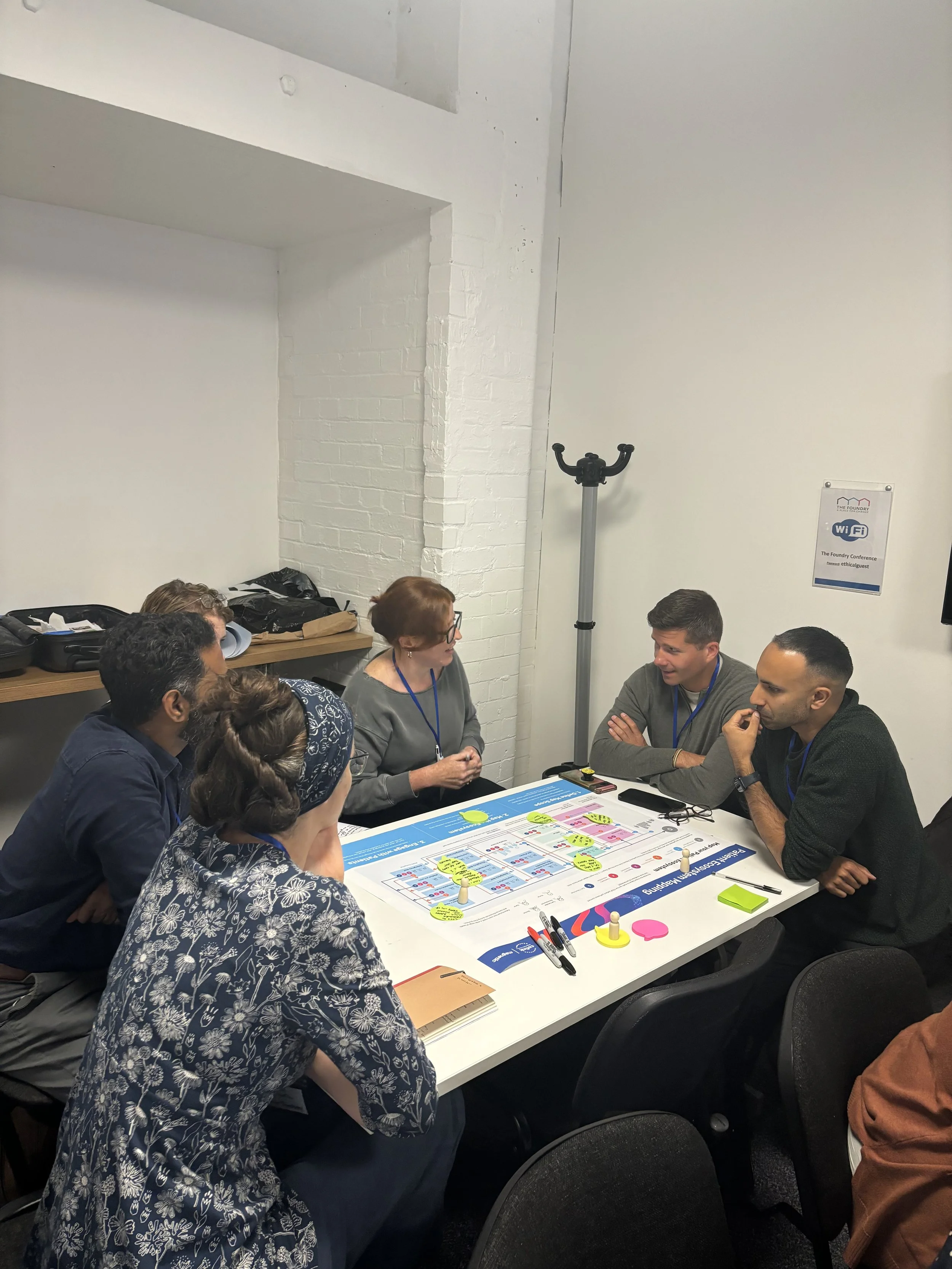
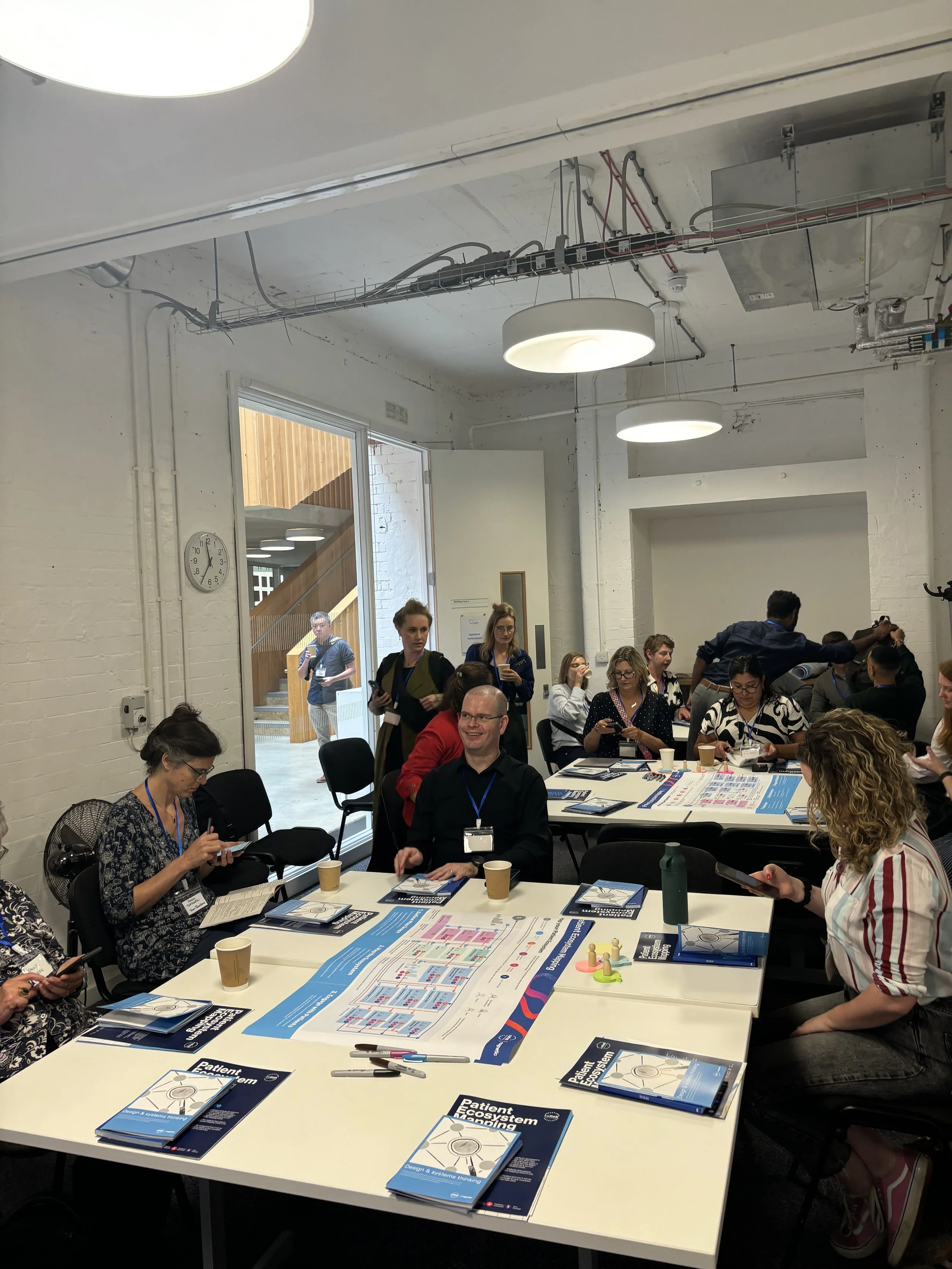
Patient Ecosystem Mapping
To extend the impact of the workshop beyond the session itself, I designed a takeaway booklet for participants. The booklet brought together key design and systems thinking methods - explaining when and how to use them, with practical steps and tips. It also included worksheets that participants could either replicate within their own work or use directly, giving them a hands-on way to apply the tools. My aim was to provide a resource participants could return to in their own professional practice, helping them revisit the methods, experiment with them, and continue exploring systems thinking after the workshop. By making the content accessible and actionable, the booklet served as both a learning aid and a reference guide, ensuring the ideas introduced in the workshop had lasting value.
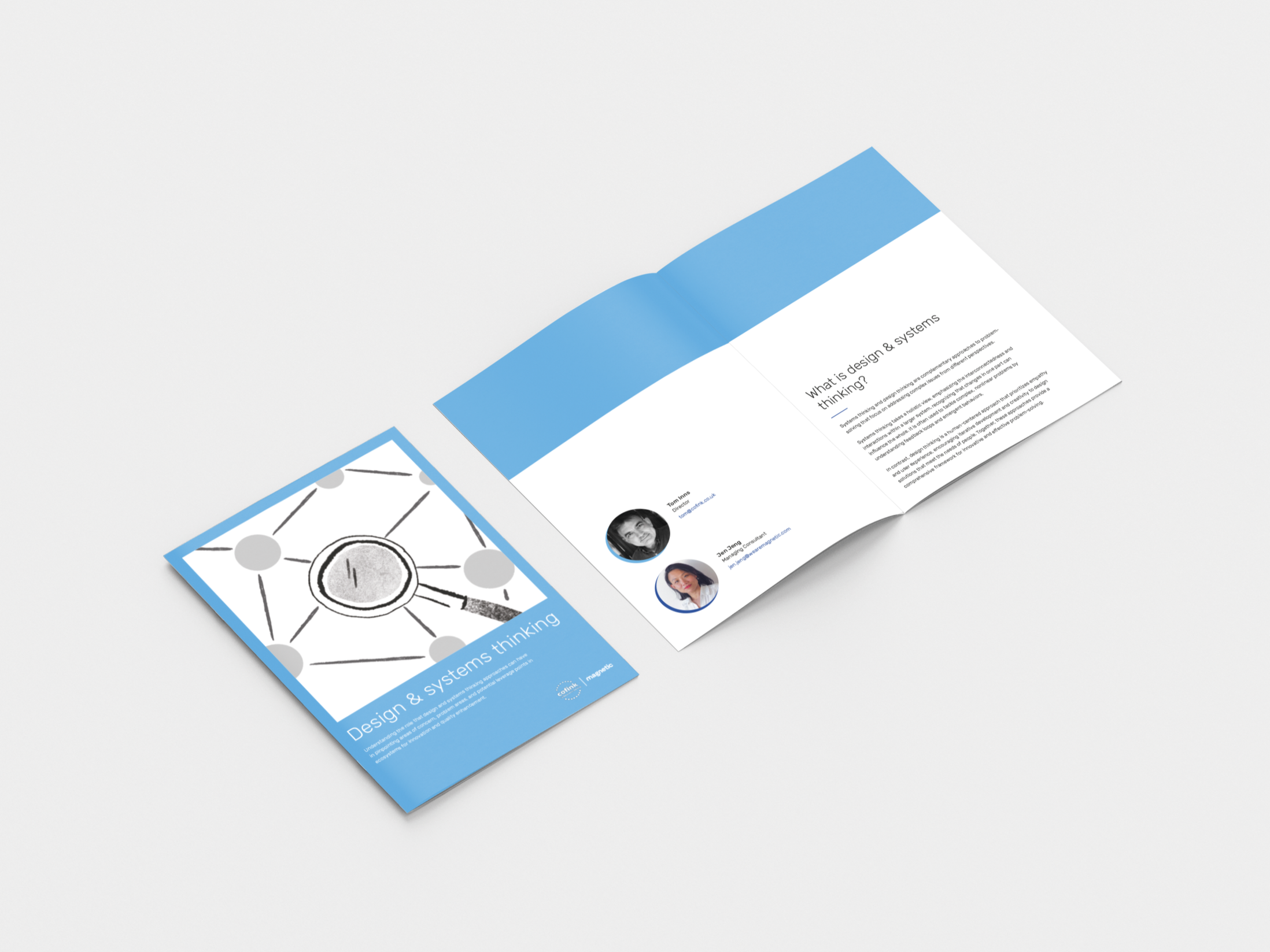
Design & Systems Thinking Methodologies Booklet

Impact
The workshop served as a starting point to encourage participants to adopt a systemic perspective and create change toward patient-centered healthcare.
There was a great deal of discussion about how the insights and potential briefs could help reset the aims of our healthcare systems. We also reflected on how these approaches might connect to our own professional practices, sharing ideas and resources for enacting change. For me, it was a valuable opportunity to learn by testing ideas with other professionals interested in systems thinking, and to see firsthand how different perspectives can enrich the process.